 |
|
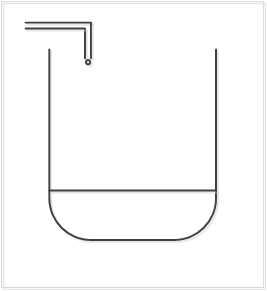
Batch Propagation is the simplest and most traditional method of yeast biomass cultivation. In this process, the bioreactor is filled with a fixed volume of complete growth medium, inoculated with a starter culture, and then allowed to grow without any further addition of nutrients or removal of broth until the end of the cultivation. The yeast cells initially go through a lag phase, followed by exponential growth until readily available nutrients (especially the carbon source) are depleted, after which growth slows and the culture enters the stationary phase. While batch propagation is easy to operate and requires minimal equipment, it typically results in lower final biomass concentrations and lower overall productivity due to substrate limitation and potential accumulation of inhibitory by-products such as ethanol. It is commonly used for small-scale production, research studies, and certain specialized applications where simplicity is prioritized over maximum yield.
|
 |
|
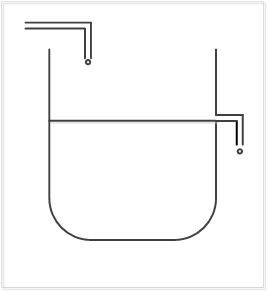
Fed-batch Propagation is the most widely used method for industrial yeast biomass production. In this process, the bioreactor is initially filled with a limited volume of medium and inoculated with yeast. As cultivation progresses, a concentrated carbon source (typically molasses or glucose) is fed incrementally or continuously into the fermenter at a controlled rate, while the culture volume gradually increases. This feeding strategy maintains low residual sugar concentrations, prevents the Crabtree effect and ethanol formation in Saccharomyces cerevisiae, and allows the cells to remain in a fully respiratory metabolism. As a result, fed-batch cultivation achieves significantly higher final biomass concentrations (often 100–150 g/L dry weight) compared to simple batch processes, with excellent control over growth rate, cell physiology, and product quality. It is the standard method for commercial baker’s yeast, brewer’s yeast, and many other microbial biomass productions |
 |
|
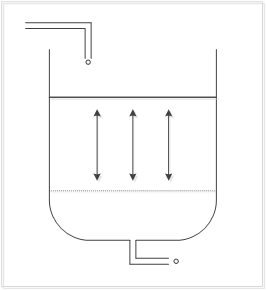
Continuous Propagation also known as chemostat cultivation, is a steady-state yeast biomass production process in which fresh medium is continuously fed into the bioreactor at a constant dilution rate while an equal volume of culture broth containing cells and spent medium is simultaneously removed. This maintains a constant culture volume and keeps the yeast population in a prolonged exponential growth phase at a controlled specific growth rate (μ) determined by the dilution rate. By carefully balancing nutrient supply and cell removal, high biomass productivity can be achieved with efficient substrate utilization. Continuous propagation is particularly advantageous for large-scale industrial applications requiring consistent biomass quality, such as single-cell protein (SCP) production, wastewater treatment, or certain bioethanol processes, although it demands strict aseptic conditions and precise process control to prevent contamination and washout.
|
 |
|
Semi-continuous propagation also known as repeated fed-batch or draw-and-fill cultivation, is a hybrid yeast biomass production method that combines elements of both batch and continuous processes. In this system, the culture is grown in a bioreactor under fed-batch conditions until it reaches a high biomass concentration. A portion of the mature culture (typically 30–70%) is then harvested, and an equal volume of fresh medium is immediately added to the remaining broth. This allows the process to restart with a high initial cell density, significantly shortening or eliminating the lag phase. The cycle of growth, partial harvest, and medium refill is repeated multiple times. This technique offers higher overall productivity than simple batch cultivation, better utilization of the bioreactor, and more consistent product quality, making it widely used in industrial baker’s yeast production and other microbial biomass applications.
|
|
Key parameters optimized across these processes include temperature, pH, dissolved oxygen, carbon-to-nitrogen ratio, and trace element supplementation. Substrates vary by purpose: molasses is traditional for baker’s yeast, while agro-industrial wastes (cheese whey, lignocellulosic hydrolysates, brewery spent grains, or glycerol) are increasingly used for sustainable SCP or bioethanol-related biomass. For ethanol-focused applications, procedures may shift toward micro-aerobic or anaerobic conditions once sufficient biomass is achieved, favoring fermentative metabolism.
After the growth phase, downstream procedures include harvesting the biomass by centrifugation or filtration, washing to remove residual medium, and further processing such as drying, autolysis, or extraction to produce active dry yeast, yeast extracts, or protein-rich SCP. For specialized uses, additional steps like immobilization of cells or genetic optimization may enhance performance.
These processes are tailored to balance high biomass yield, desired physiological properties (e.g., fermentative capacity, stress tolerance, or protein content), cost efficiency, and product quality. Advances in media development, feeding strategies, and bioreactor design continue to expand the diversity of applications while improving sustainability through the valorization of low-cost substrates.
For greater detail on specific sections, refer to the compiled references on Yeast Growth Principles, Media Development, and Biomass Production, or explore the E-Modules and online calculators available through FermAxiom LLC.
|